

Defending yourself against drug charges in Mississippi requires understanding the specific legal standards for search and seizure, the distinction between state and federal jurisdiction, and the procedural rights guaranteed by the Constitution. William Wayne Housley, Attorney at Law provides specialized representation for these complex cases, ensuring that every procedural step is scrutinized for potential violations that could impact the outcome of your case.
Understanding Mississippi Drug Statutes and Penalties
Mississippi law categorizes controlled substances into schedules, which directly dictate the severity of the penalties. A drug offense is a criminal act involving the possession, manufacture, distribution, or intent to distribute a controlled substance. The state penal code outlines specific prison terms and fines based on the type and quantity of the drug involved. For example, possession of a small amount of marijuana is treated differently than possession of a larger quantity, which may be construed as intent to distribute. Understanding these distinctions is critical because the charge level determines the potential for mandatory minimum sentences.
The legal framework in Mississippi is strict, and the burden of proof lies with the state to establish every element of the crime beyond a reasonable doubt. However, the initial classification of the substance and the quantity found can significantly influence the prosecution's strategy. Defendants must be aware that even minor discrepancies in weight or purity can alter the legal classification of the offense. This is why a detailed review of the lab reports and police records is essential in the early stages of the defense.
The Fourth Amendment and Search Challenges
The Fourth Amendment protects individuals from unreasonable searches and seizures, a right that is frequently tested in drug cases. A search warrant is generally required for police to enter a home or vehicle, unless an exception such as consent, probable cause, or exigent circumstances applies. If law enforcement conducts a search without a valid warrant or proper legal justification, the evidence obtained may be suppressed. This means the drugs and any related items cannot be used against the defendant in court.
Challenging the legality of a search is often the most effective defense strategy in drug cases. For instance, if an officer stops a vehicle without reasonable suspicion, any subsequent search of the car may be deemed unconstitutional. The defense attorney must review the body camera footage, police reports, and witness statements to identify any procedural errors. In Tupelo and surrounding areas, many cases hinge on whether the initial traffic stop or home entry was legally justified. A successful suppression motion can lead to the dismissal of charges or a significant reduction in the plea offer.
Federal vs. State Jurisdiction in Drug Cases
Drug cases in Mississippi can be prosecuted under state law or federal law, and the jurisdiction determines the court, the judge, and the potential penalties. Federal drug charges are often brought in cases involving large quantities of drugs, interstate trafficking, or the use of firearms during the commission of the crime. The federal system operates under different sentencing guidelines, which can result in harsher mandatory minimums compared to state law. For example, a federal charge for distributing cocaine may carry a mandatory minimum sentence that is significantly higher than the equivalent state charge.
It is crucial to determine early in the case whether the prosecution is state or federal. The defense strategy must account for the specific rules of the federal court, including the Federal Rules of Criminal Procedure. Recent federal sweeps in North Mississippi have highlighted the increasing involvement of federal agencies in local drug enforcement. Defendants facing federal charges need an attorney who understands the nuances of federal sentencing and the specific rights afforded under the U.S. Constitution. The choice of jurisdiction can make or break a case, and early legal intervention is vital to protect the defendant's rights.
Effective Defense Strategies for Drug Offenses
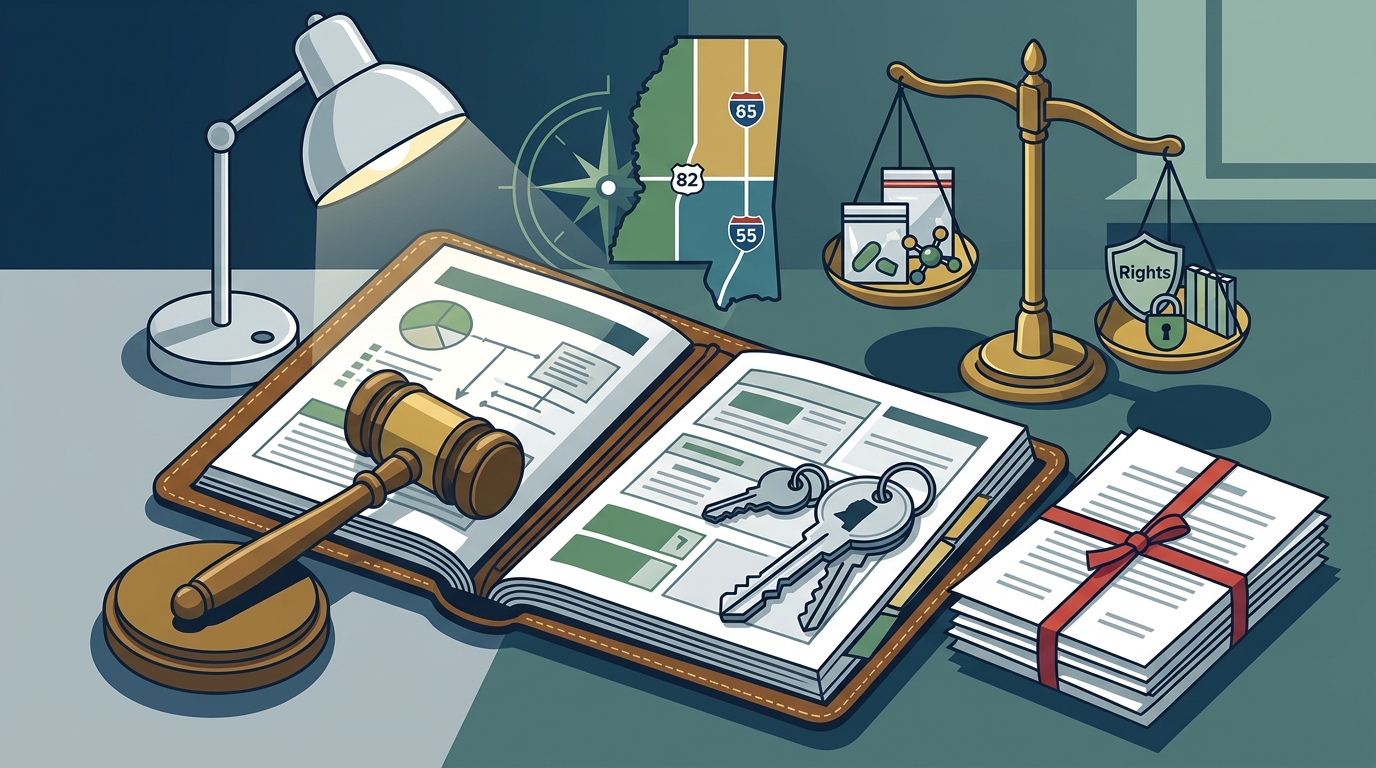
Negotiating a plea deal is another critical aspect of the defense process. Prosecutors may be willing to reduce charges in exchange for a guilty plea, especially if the evidence is strong. However, a skilled attorney will evaluate the strengths and weaknesses of the case before recommending a plea. In some cases, the defense may seek to have the charges reduced from a felony to a misdemeanor, which can significantly lower the potential prison time and fines. The goal is to achieve the best possible outcome for the client, whether that is an acquittal, a reduced sentence, or a favorable plea agreement.
Long-Term Consequences of a Drug Conviction
A drug conviction carries consequences that extend far beyond the immediate legal penalties. A criminal record can affect employment, housing, and professional licensing opportunities. In Mississippi, a felony conviction can result in the loss of certain civil rights, including the right to vote and the right to own a firearm. These long-term impacts make it essential to seek the best possible defense from the outset. The stigma of a drug conviction can follow a person for life, making it crucial to explore all available legal options.
Expungement and record sealing are potential remedies for some drug convictions, but they are not available in all cases. The eligibility for expungement depends on the specific charge, the outcome of the case, and the time that has passed since the conviction. An attorney can advise on the possibility of clearing a record and the steps required to do so. Protecting your future is just as important as defending against the current charges, and a comprehensive legal strategy should address both immediate and long-term concerns.
Key Takeaways
- Mississippi drug laws are strict, and the classification of the substance and quantity determines the severity of the penalties.
- Challenging the legality of the search and seizure is a primary defense strategy in many drug cases.
- Federal drug charges often carry harsher mandatory minimum sentences than state charges, making jurisdiction a critical factor.
- Lab errors and improper handling of evidence can provide grounds for challenging the prosecution's case.
- A drug conviction has long-term consequences for employment, housing, and civil rights, making a strong defense essential.
- Early legal intervention is vital to protect your rights and explore all available defense options.
Frequently Asked Questions
What is the difference between a state and federal drug charge in Mississippi?
State charges are prosecuted in Mississippi state courts, while federal charges are prosecuted in U.S. District Court. Federal charges often involve larger quantities or interstate trafficking and may carry higher mandatory minimum sentences.
Can I refuse a search of my vehicle or home?
You have the right to refuse consent to a search, but police may still search if they have a valid warrant or probable cause. Refusing consent does not stop a legal search but can prevent an illegal one.
What are the penalties for a first-time drug offense in Mississippi?
Penalties depend on the type and quantity of the drug. A first-time offense for a small amount of marijuana may result in a fine and probation, while larger quantities can lead to prison time.
How long does a drug case take to resolve in Mississippi?
The timeline varies depending on the complexity of the case and the court's schedule. Some cases are resolved through plea deals in a few months, while others may take over a year if they go to trial.
Can a drug conviction be expunged in Mississippi?
Some drug convictions may be eligible for expungement or record sealing, but eligibility depends on the specific charge and the outcome of the case. An attorney can advise on your options.
What should I do if I am arrested for a drug offense?
Remain silent, do not consent to any searches, and contact an attorney as soon as possible. An attorney can advise you on your rights and help you navigate the legal process.
Protect Your Rights with Expert Legal Representation
Facing drug charges in Mississippi is a serious matter that requires a knowledgeable and experienced defense attorney. William Wayne Housley, Attorney at Law has over 30 years of experience in criminal defense and is dedicated to protecting the rights of clients in Tupelo and across the state. The firm provides a free consultation to discuss your case and develop a tailored defense strategy. Do not navigate this complex legal process alone. Contact the firm today to schedule your consultation and take the first step toward protecting your future.