

A criminal conviction in Mississippi does not have to be the final chapter. The appellate system exists precisely because courts recognize that errors happen — from improper jury instructions to unconstitutional evidence rulings. Yet every year, potentially meritorious appeals are lost not because the law was against the defendant, but because avoidable procedural and strategic mistakes gutted the case before a judge ever read the brief.
If you or someone you care about is considering an appeal after a conviction in a Mississippi circuit court, municipal court, or justice court, this article breaks down the seven most common — and most devastating — mistakes people make, and exactly what you should do instead.
Mistake 1: Missing the 30-Day Filing Deadline
This is the single most fatal mistake in Mississippi criminal appeals. Under Mississippi Rules of Appellate Procedure (MRAP) Rule 4(a), the Notice of Appeal must be filed within 30 days of the judgment of conviction or sentencing. This deadline is not a suggestion — it is jurisdictional. Mississippi courts have ruled repeatedly that they cannot extend this period absent narrow statutory exceptions.
Once the window closes, the appellate court literally lacks the authority to hear your case. No amount of compelling legal argument about trial errors will matter if the appeal was never properly initiated.
How To Avoid It
- Mark the sentencing date on your calendar and count forward exactly 30 days. The Notice of Appeal must be filed — not just drafted — by that date.
- Retain appellate counsel immediately after sentencing, or ideally before. An experienced Mississippi criminal defense attorney like William Wayne Housley can ensure the notice is prepared and filed well within the deadline.
- If you are indigent and qualify for appointed counsel, notify the court promptly so the Mississippi Office of State Public Defender can be engaged in time.
Mistake 2: Treating an Appeal Like a Second Trial
Many defendants — and even some attorneys without appellate experience — approach a criminal appeal as though it were a do-over of the original trial. It is not. An appeal is a review of the existing trial record for legal errors, not a chance to present new witnesses, introduce additional evidence, or re-argue the facts to a new jury.
The appellate court examines the trial court record, legal arguments, and relevant case law to determine whether the conviction should be upheld or overturned. It does not make new findings of fact about guilt or innocence.
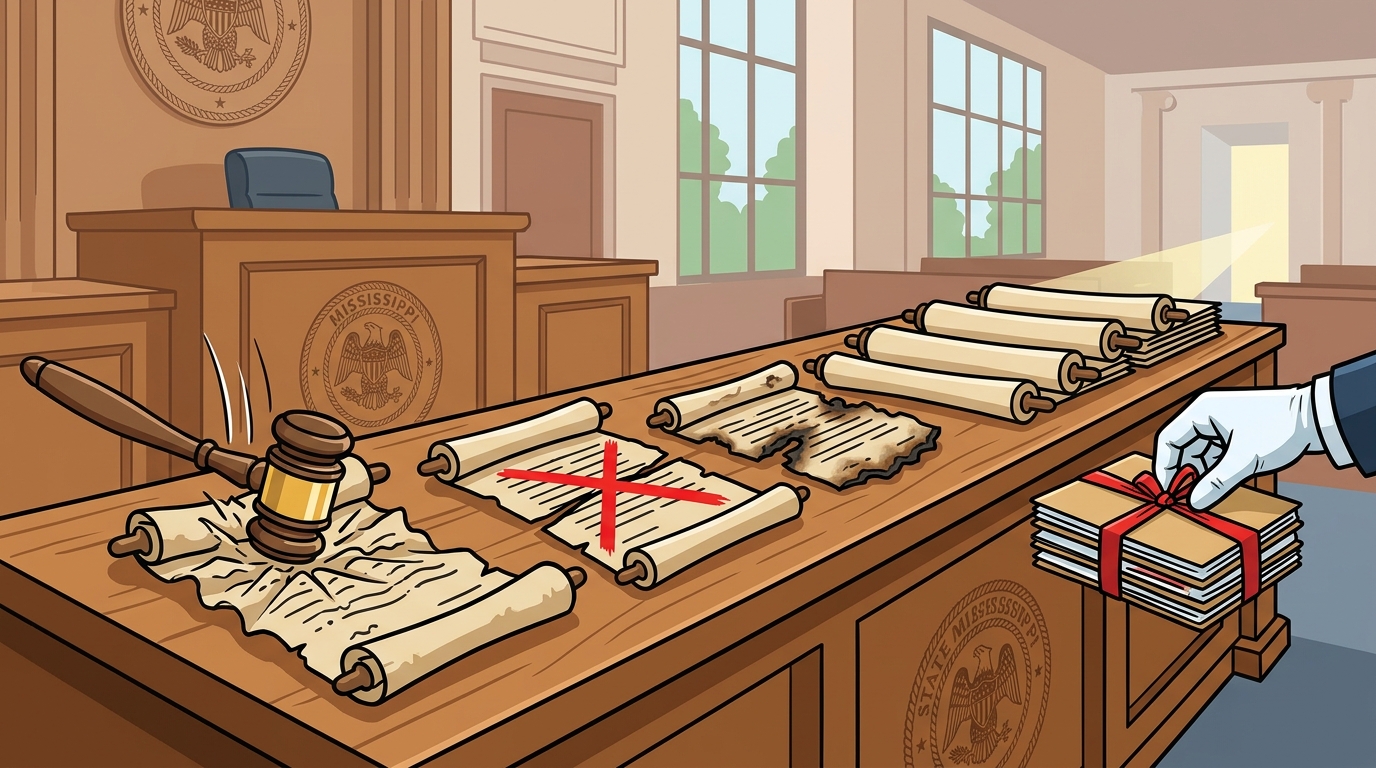
How To Avoid It
- Understand from the outset that appellate courts are concerned exclusively with whether the trial court made mistakes in applying the law.
- Work with an attorney who can objectively analyze the trial record and identify genuine legal errors — such as incorrect jury instructions, improper admission or exclusion of evidence, or sentencing miscalculations — rather than simply relitigating the case.
Mistake 3: Failing To Preserve Issues at Trial
Here is where a criminal appeal is often won or lost before it even begins. Under Mississippi law, an appellate court generally will not consider an issue that was not raised and objected to in the trial court. This doctrine, known as preservation of error, means that if your trial attorney failed to object to an improper jury instruction, a prejudicial evidentiary ruling, or prosecutorial misconduct at the time it occurred, that issue may be procedurally barred on appeal.
A real-world example from recent Mississippi Court of Appeals decisions: in one capital-murder case, a defendant's argument regarding a jury flight instruction was found legally barred because it was never raised in the trial court. The merits of the argument were never reached.
How To Avoid It
- If you are still at the trial stage, insist that your attorney makes timely, specific objections on the record for any ruling you believe is wrong.
- If you are already post-trial, an experienced appellate attorney can review the record for issues that were preserved and identify whether any unpreserved issues might qualify for plain-error review — a much harder standard to meet, but not impossible.
Mistake 4: Ignoring the Appellate Record
After the Notice of Appeal is filed, the trial court clerk and court reporter compile the official appellate record — transcripts, exhibits, motions, and rulings — that gets sent to the Mississippi Supreme Court or Court of Appeals. This record is the only evidence the appellate court will consider. If something is missing from it, it functionally does not exist for purposes of the appeal.
Errors in record preparation do occur. In documented Mississippi cases, circuit clerks have made mistakes assembling records, leading to delays and supplemental filings that can prejudice the appellant.
How To Avoid It
- Your appellate attorney should carefully review the designation of the record to ensure every relevant transcript, motion, order, and exhibit is included.
- Request and review the transcript as soon as it is available. If the court reporter omits a critical hearing or a sidebar discussion where an objection was made, it must be corrected before briefing begins.
- If the clerk's office makes errors, file a motion to supplement the record immediately — delays compound quickly in appellate timelines.
Mistake 5: Filing Pro Se Without Understanding Appellate Rules
While every defendant has a constitutional right to represent themselves on appeal, the Mississippi appellate courts apply the same procedural and briefing standards to pro se appellants as they do to licensed attorneys. MRAP governs everything from the format of briefs to the content requirements for the statement of issues, standard of review, and argument sections.
Pro se briefs that fail to cite relevant case law, misstate the standard of review, or neglect to include required sections are routinely dismissed or decided on procedurally deficient grounds — regardless of whether the underlying trial error had merit.
How To Avoid It
- If cost is a concern, explore indigent-defense options. The Mississippi Office of the State Public Defender provides representation for qualifying indigent criminal appellants under Mississippi Code § 99-18-1.
- If you choose to proceed pro se, study the Mississippi Rules of Appellate Procedure thoroughly and examine successful appellate briefs as models.
- Consider at minimum a paid consultation with an appellate attorney who can identify the strongest issues and advise on brief structure, even if you cannot afford full representation.
Mistake 6: Confusing Direct Appeal with Post-Conviction Relief
These are two distinct legal mechanisms, and confusing them can result in waiving your rights under one or both. A direct appeal challenges legal errors that occurred during your trial and must be filed within the 30-day window discussed above. Post-conviction relief (PCR), governed by Mississippi Code § 99-39-1 (the Uniform Post-Conviction Collateral Relief Act), is a separate process available only after the direct appeal is exhausted or waived.
PCR focuses on issues that were not or could not have been raised on direct appeal — things like newly discovered evidence, ineffective assistance of counsel, or constitutional violations that emerge after the trial record is closed.
How To Avoid It
- Always pursue your direct appeal first if you have viable trial-error issues. Skipping the direct appeal to file a PCR petition can permanently waive arguments that should have been raised earlier.
- Understand that PCR has its own procedural requirements and deadlines, and courts may deny petitions that raise issues that could have been — and should have been — brought on direct appeal.
- Work with an attorney who understands both pathways and can advise on the proper sequence and strategy.
Mistake 7: Hiring a General Practitioner Instead of an Appellate-Focused Attorney
Trial lawyering and appellate lawyering are fundamentally different skill sets. A trial attorney excels at examining witnesses, selecting juries, and presenting evidence. An appellate attorney excels at legal research, persuasive writing, identifying reversible error in transcripts, and understanding the specific procedural requirements of the Mississippi Supreme Court and Court of Appeals.
Hiring a lawyer who primarily handles real-estate closings or contract disputes to manage your criminal appeal is a recipe for procedural missteps and missed arguments. Similarly, even an excellent trial-level criminal defense attorney may not have the appellate experience necessary to craft a winning brief.
How To Avoid It
- Ask potential attorneys directly: How many Mississippi criminal appeals have you handled? What were the outcomes?
- Look for attorneys who are familiar with the Mississippi Court of Appeals and Supreme Court — practitioners who regularly file briefs and appear before these courts.
- Use The Mississippi Bar's Find a Lawyer Directory to filter by practice area and location, or contact the National Association of Criminal Defense Lawyers directory for Mississippi appellate attorneys.
How Housley Law Helps You Avoid These Mistakes
William Wayne Housley, Attorney at Law, brings over 30 years of legal experience to criminal defense clients across Mississippi, with particular focus on communities north of Highway 82 and west of I-55, including the Tupelo area. The firm understands that the margin for error in an appeal is razor thin, and provides the kind of detail-oriented, deadline-conscious representation that appellate cases demand.
Whether you need someone to file a timely Notice of Appeal, meticulously review a trial record for preserved errors, or advise on whether your case is better suited for direct appeal or post-conviction relief, Housley Law is prepared to guide you through each step.
Call 662-222-0900 for a free consultation. The 30-day clock may already be running — do not let a procedural mistake erase your chance at justice.
Key Takeaways
- The 30-day deadline is absolute. Missing the Notice of Appeal filing window eliminates your right to appeal in almost all circumstances.
- Appeals review legal errors, not facts. You cannot introduce new evidence or retry the case on appeal.
- Preservation matters. Objections not made at trial may be waived on appeal, with limited exceptions for plain error.
- The appellate record is everything. Verify its completeness before briefing begins.
- Pro se appeals face the same standards. Courts do not relax procedural rules for self-represented appellants.
- Direct appeal and PCR are different paths. Using the wrong one at the wrong time can permanently forfeit your arguments.
- Hire for appellate skill, not just trial skill. The disciplines are different, and your freedom may depend on the distinction.
Frequently Asked Questions
What happens if I miss the 30-day deadline to file a Notice of Appeal in Mississippi?
In most cases, the appellate court loses jurisdiction over your case entirely. The 30-day deadline under MRAP Rule 4(a) is strictly jurisdictional, meaning the court cannot extend it absent very narrow statutory exceptions. This is why contacting an attorney immediately after sentencing is critical.
Can I present new evidence during a Mississippi criminal appeal?
No. A direct appeal is not a new trial. The appellate court reviews the existing trial record for legal errors. If you have newly discovered evidence, you may need to pursue post-conviction relief (PCR) under Mississippi Code § 99-39-1 after your direct appeal is resolved.
Can I appeal a guilty plea in Mississippi?
Generally, if you plead guilty, you waive your right to appeal the conviction itself. However, there may be limited grounds to challenge the plea — such as arguing it was not entered knowingly or voluntarily — or to appeal the sentence. An experienced appellate attorney can evaluate whether any viable issues exist.
What is the difference between the Mississippi Supreme Court and the Court of Appeals for criminal cases?
All criminal appeals from circuit court are initially filed with the Mississippi Supreme Court. However, the Supreme Court transfers the majority of criminal cases — roughly 80 percent — to the Court of Appeals for decision. The Supreme Court retains cases involving death penalties, novel legal issues, and other matters of statewide significance. After the Court of Appeals rules, a party may petition the Supreme Court for certiorari review, which is discretionary.
How much does it cost to appeal a criminal conviction in Mississippi?
Costs vary depending on the complexity of the case, the length of the trial record, and the attorney's fee structure. Key expenses include attorney fees for record review and brief writing, court filing fees, and transcript costs. If you cannot afford an attorney, you may qualify for in forma pauperis status and representation through the Mississippi Office of State Public Defender. Call Housley Law at 662-222-0900 for a free consultation to discuss your specific situation.
Where can I find a Mississippi attorney to appeal a criminal conviction near Tupelo?
William Wayne Housley, Attorney at Law, serves clients throughout Mississippi with a particular focus on areas north of Highway 82 and west of I-55, including the Tupelo region. With over 30 years of criminal defense experience, the firm handles appeals at both the trial and appellate court levels. You can also search The Mississippi Bar's Find a Lawyer Directory or the NACDL's attorney directory to locate appellate practitioners by location and practice area.