

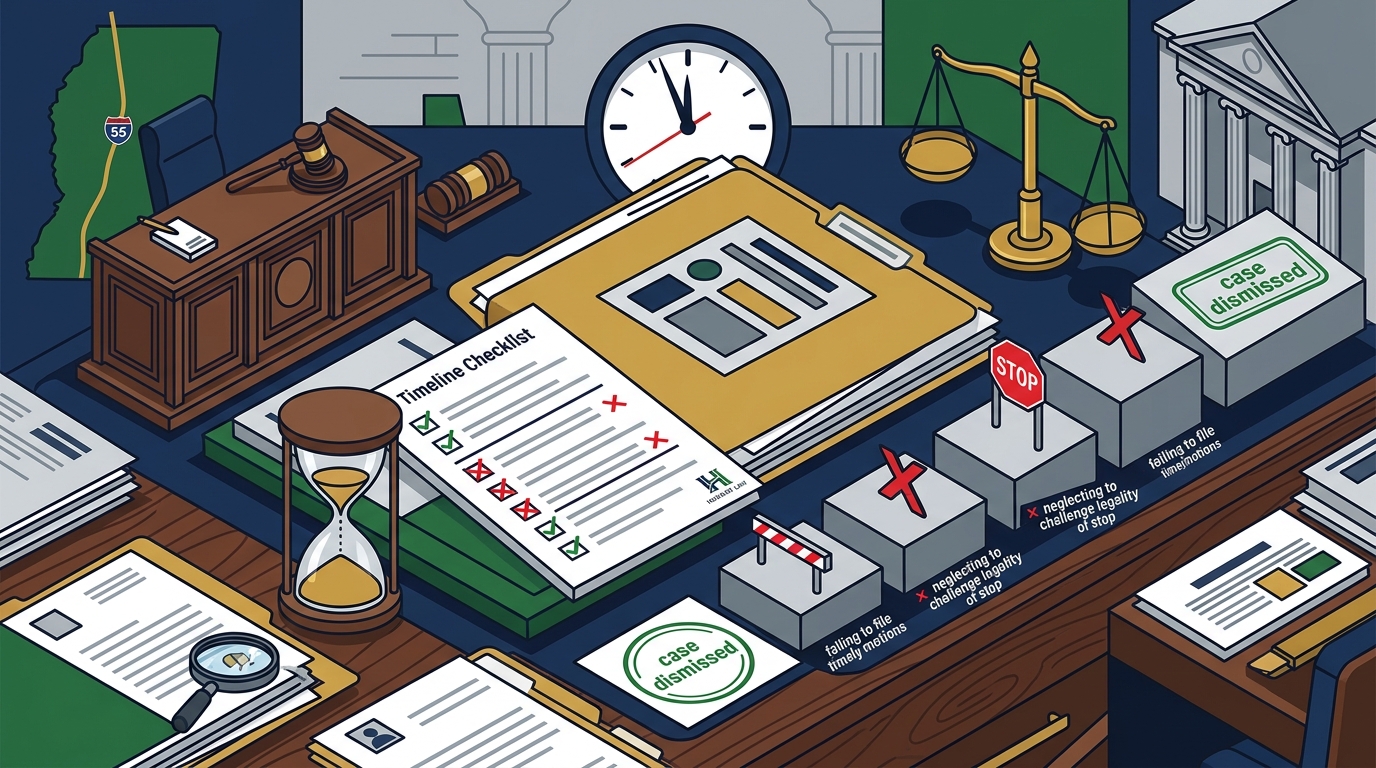
Mississippi criminal defense is a high-stakes environment where procedural precision dictates outcomes. According to recent legal industry analyses, a significant percentage of criminal cases fail to achieve dismissal not because of a lack of evidence, but due to critical strategic errors made by defendants and their counsel during the pre-trial phase. These errors often include failing to file timely motions to suppress evidence, neglecting to challenge the legality of the initial stop, or missing strict statutory deadlines for discovery requests. When these procedural safeguards are ignored, the prosecution retains leverage that can lead to severe convictions. Understanding these pitfalls is essential for anyone facing charges in Tupelo or throughout Mississippi.
Mississippi Statutory Deadlines and Filing Errors
One of the most immediate barriers to a case dismissal is the failure to adhere to Mississippi's strict procedural timelines. In criminal law, deadlines are not merely suggestions. They are rigid constraints that, when missed, can waive a defendant's right to challenge specific aspects of their case. For instance, motions to suppress evidence based on Fourth Amendment violations must often be filed before trial. If an attorney misses this window, the court may refuse to hear the argument, leaving unconstitutional evidence admissible.
Another common mistake involves the initial arraignment and pre-trial conferences. Defendants who fail to appear or who do not have counsel present to negotiate bail conditions often find themselves detained pre-trial. This detention can pressure them into accepting unfavorable plea deals simply to regain their freedom. The legal system operates on a schedule, and missing a single date can derail the entire defense strategy. At Housley Law, we emphasize that proactive management of these calendar constraints is the first line of defense against procedural dismissal barriers.
Critical Errors in Evidence Suppression
Evidence suppression is a powerful tool for achieving case dismissal. However, it requires a nuanced understanding of constitutional law. A frequent error is the failure to identify the specific legal grounds for suppression. It is not enough to claim that evidence was obtained unfairly. The defense must articulate whether the stop was unreasonable, the search lacked a warrant, or the confession was coerced. Without this specificity, the motion is likely to be denied.
Furthermore, defendants often make the mistake of speaking to law enforcement without legal counsel. Anything said during these interactions can be used to establish probable cause or to impeach the defendant's credibility later. If the defense cannot challenge the initial legality of the police interaction, the subsequent evidence collection is often deemed lawful. This creates a chain of evidence that is difficult to break. Effective defense requires challenging the root of the investigation, not just the fruits of it. For more insights on criminal defense strategies, visit our Criminal Defense page.
Negligence in Discovery and Investigation
Discovery is the process by which the defense obtains evidence held by the prosecution. A major mistake in Mississippi criminal cases is failing to request all relevant discovery materials promptly. This includes police reports, body camera footage, forensic lab results, and witness statements. If the defense does not request these items, they may not receive them until it is too late to analyze or challenge them.
Another critical error is the lack of independent investigation. Relying solely on the prosecution's narrative is a strategic failure. Defense attorneys must independently verify alibis, consult expert witnesses, and review traffic camera footage. Without this independent verification, it is nearly impossible to create reasonable doubt. The burden of proof lies with the state, but the defense must actively create the doubt. This requires resources and diligence that many pro se litigants or under-resourced public defenders cannot provide. Contact our team to ensure your discovery rights are fully protected.
Risks of Premature Plea Negotiations
Many defendants make the mistake of accepting a plea bargain before fully understanding the strength of their case. Prosecutors often offer reduced charges early in the process to secure a conviction quickly. However, these early offers may be based on incomplete information or weak evidence. By pleading guilty before challenging the evidence, the defendant forfeits the right to a trial and any potential dismissal.
It is crucial to wait until the discovery phase is complete and all pre-trial motions are resolved before engaging in serious plea negotiations. This allows the defense to assess the true value of the case. If the evidence is flawed, the prosecution may be willing to offer a better deal or even dismiss the charges. Rushing into a plea bargain is a common error that leads to unnecessary criminal records. For a free consultation on your case options, get in touch with us today.
Comparison of Defense Strategies
Different types of criminal charges require different approaches to seeking dismissal. Below is a comparison of common strategies based on the nature of the offense.
| Charge Type | Primary Dismissal Strategy | Common Mistake to Avoid |
|---|---|---|
| DUI/DWI | Challenging the legality of the traffic stop and field sobriety tests. | Failing to request breathalyzer calibration records. |
| Drug Possession | Motion to suppress based on lack of probable cause for search. | Admitting ownership of contraband during initial arrest. |
| Assault/Battery | Presenting self-defense evidence and witness testimony. | Missing deadlines for witness statements. |
| Domestic Violence | Challenging the credibility of the accuser and evidence integrity. | Violating protective orders during the investigation. |
Key Takeaways
- Procedural Precision: Missing statutory deadlines in Mississippi can waive critical defense rights, leading to the admission of otherwise suppressible evidence.
- Evidence Suppression: Successful dismissal often hinges on challenging the initial legality of the police stop or search under the Fourth Amendment.
- Discovery Importance: Failing to request all police reports and forensic data early in the process can prevent the defense from identifying case weaknesses.
- Plea Bargain Timing: Accepting plea deals before discovery is complete is a common error that forfeits the opportunity for case dismissal.
- Legal Representation: Experienced attorneys, such as those at Housley Law, are essential for navigating complex procedural rules and protecting client rights.
- Communication Risks: Speaking to law enforcement without counsel can provide the prosecution with the probable cause needed to sustain charges.
- Independent Investigation: Relying solely on the prosecution's narrative ignores the defense's duty to create reasonable doubt through independent verification.
Frequently Asked Questions
Can a case be dismissed if the police made a mistake?
Yes, if the police made a significant constitutional error, such as an unlawful search or seizure, the evidence may be suppressed. If the remaining evidence is insufficient, the case can be dismissed. However, this requires a timely and properly filed motion to suppress.
What is the statute of limitations for criminal cases in Mississippi?
The statute of limitations varies by crime. For example, misdemeanors typically have a three-year limit, while felonies may have longer or no limits depending on the severity. It is crucial to consult with a lawyer immediately to ensure your rights are protected within these timeframes.
How long does it take to get a case dismissed in Mississippi?
The timeline depends on the complexity of the case and the court's schedule. Motions to dismiss can take several weeks to months to be heard. Pre-trial negotiations may also extend the process. Patience and strategic planning are key.
What happens if I miss a court date?
Missing a court date results in a bench warrant for your arrest. This can lead to additional charges and makes achieving a case dismissal much more difficult. It is critical to appear for all scheduled hearings or have your attorney address the absence immediately.
Can I represent myself to get my case dismissed?
While you have the right to self-representation, criminal law is complex. Procedural errors by pro se litigants often lead to unfavorable outcomes. Professional legal representation significantly increases the likelihood of a successful dismissal.
What is the role of a pre-trial conference?
A pre-trial conference is a meeting between the judge, prosecutor, and defense attorney to discuss the case status, potential plea deals, and trial readiness. It is a critical opportunity to negotiate dismissals or reduced charges before trial.
How does Housley Law help with case dismissals?
We provide aggressive defense strategies, including filing motions to suppress evidence, challenging discovery violations, and negotiating with prosecutors. Our goal is to protect your rights and seek the best possible outcome, including dismissal.
Secure Your Defense Today
Do not let common mistakes jeopardize your freedom. If you are facing criminal charges in Mississippi, you need a legal team that understands the nuances of local procedure and constitutional law. Contact Housley Law today to schedule your free consultation. We are dedicated to fighting for your rights and achieving the best possible outcome for your case.